Source Wireless Charger for iPhone, iWatch, and Airpods
Find 30 wireless charger options with varying output power, cable lengths, and mounting types. Compare specifications for portable, tabletop, and wall mount models compatible with iPhone, iWatch, and Airpods devices.
Key considerations
Products List


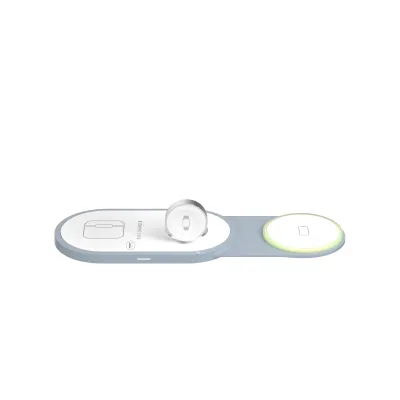


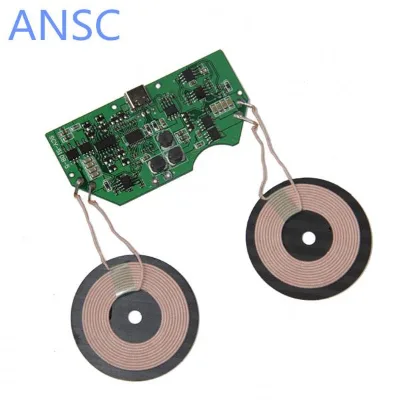


Comprehensive Sourcing Guide
Strategic Sourcing Guide for Wireless Charging Solutions
Understanding Technical Specifications and Performance Metrics
When evaluating wireless chargers for B2B procurement, the primary focus must remain on the precise technical attributes that define compatibility and efficiency. The market offers a diverse array of models, each defined by specific power output capabilities and input requirements. Buyers must scrutinize the charging output power, which in observed product lines ranges from 5W to 15W, often segmented into 15W, 10W, 7.5W, and 5W tiers to accommodate different device standards. It is critical to note that conversion efficiency is a key performance indicator; some observed units operate with an efficiency of less than 80%, a figure that directly impacts energy consumption and heat generation during prolonged use.
Connectivity technology serves as another fundamental differentiator. The supply data indicates a split between wireless charging solutions and those utilizing USB connectivity. For wireless models, the charging mechanism is designed to be seamless, often supporting specific ecosystems like Apple devices, including iPhones, iWatches, and Airpods. In contrast, wired variants rely on USB Type C connectors, with cable lengths varying significantly between 4 to 5.9 feet and 6 to 7.9 feet. Input voltage specifications also vary, with observed models operating at 9 Volts or 12 Volts, necessitating a careful review of the power adapter compatibility for the target market.
Physical dimensions and mounting types are equally vital for integration into retail displays or office environments. Standard dimensions observed include compact forms such as 16x3.3cm and larger units measuring 16x21.5x10.7cm. Mounting configurations range from tabletop mounts suitable for home or desk use to wall-mount options that save surface area. The presence or absence of a display unit is another distinct feature; some models include a digital display for status monitoring, while others are designed as minimalist, non-display units. These physical and functional attributes must be matched against the specific use case, whether it is for a high-traffic retail kiosk or a quiet office setting.
Compliance, Certification, and Safety Standards
In the realm of electronic procurement, compliance is not merely a formality but a prerequisite for market access and liability protection. The supply data explicitly references certifications such as CCC (China Compulsory Certification), RoHS (Restriction of Hazardous Substances), and ISO standards. These certifications indicate that the manufacturing process adheres to specific safety and environmental guidelines. However, buyers must verify that these certifications are current and applicable to the specific destination market, as regulatory requirements vary by region.
Safety features are integral to the design of any power delivery system. Over-current protection is a standard safety mechanism observed in the product range, designed to prevent damage to both the charger and the connected device in the event of a power surge. When evaluating suppliers, procurement teams should request documentation that confirms the presence of these protective circuits. Furthermore, the packaging standards, often listed as "Carton" or "Color Box," must be robust enough to protect the electronic components during international shipping. The standard packing configurations, such as 6 pieces or 8 pieces per carton, should be verified to ensure they align with logistics requirements and storage constraints.
Cost Drivers and Pricing Dynamics
The pricing landscape for wireless chargers is influenced by a complex interplay of factors, including model complexity, component quality, and order volume. The observed price range in the market spans from $1 to $46 USD, reflecting the vast disparity between basic, low-power units and advanced, multi-device charging stations. This wide range suggests that price is not solely a function of the core charging technology but is heavily driven by additional features such as built-in displays, specific mounting hardware, and brand compatibility optimizations.
Minimum Order Quantity (MOQ) is a significant cost driver in B2B transactions. The observed MOQ range extends from 1 unit to 1000 units, offering flexibility for different procurement strategies. Small businesses or those testing a new product line may benefit from low MOQ options, allowing for reduced inventory risk. Conversely, larger enterprises seeking economies of scale can leverage higher volume orders to negotiate better unit pricing. It is essential for buyers to understand that the unit price is rarely static; it often fluctuates based on the total volume commitment and the specific customization requirements of the order.
| Feature Category | Low-End Observation | High-End Observation | Impact on Cost |
|---|---|---|---|
| Price Range | $1 USD | $46 USD | Direct correlation to features |
| MOQ | 1 Unit | 1000 Units | Volume discounts available |
| Power Output | 5W | 15W | Higher wattage increases BOM cost |
| Display | Without Display | With Display | Adds component and assembly cost |
| Customization | Non-Customized | Customized | Tooling and setup fees apply |
Typical Applications and Use Cases
The versatility of wireless chargers allows them to be deployed across a wide spectrum of commercial and industrial applications. The presence of models compatible with specific brands like iPhone, along with outputs for watches and headphones, points to a strong suitability for consumer electronics retail environments. In these settings, chargers serve as both functional accessories and display units that demonstrate device compatibility to potential customers.
For corporate and hospitality sectors, the mounting type becomes a decisive factor. Wall-mount models are ideal for hotel rooms or office reception areas where desk space is limited, providing a convenient charging solution without cluttering surfaces. Tabletop mounts, on the other hand, are better suited for conference rooms or co-working spaces where multiple devices may need to be charged simultaneously in a shared environment. The portability of certain models also makes them suitable for travel accessories or promotional giveaways, where compact dimensions and lightweight construction are prioritized.
Supplier Evaluation and Origin Verification
When assessing potential suppliers, the origin of the product is a critical data point. The supply data indicates that the primary production origin is China, with specific mentions of Dongguang as a production location. While this provides a baseline for understanding the supply chain geography, buyers must conduct deeper due diligence regarding the specific factory capabilities. The presence of various product models, such as the 2602230922, Y-HY05, and JH25114 series, suggests a diverse manufacturing base capable of producing different form factors.
Supplier reliability is often reflected in their ability to meet customization requests. The data shows that some products are available as "Customized" while others are "Non-Customized." This distinction is vital for buyers seeking private labeling or specific branding. A supplier that offers customization options likely possesses the necessary infrastructure for branding, packaging design, and potentially firmware adjustments. However, buyers must verify the lead times and quality control measures associated with these custom orders, as they often require more time and oversight than standard stock items.
Quality Control and Inspection Protocols
Ensuring product quality requires a rigorous inspection protocol that goes beyond surface-level checks. Given the electrical nature of wireless chargers, functional testing is paramount. Buyers should verify that the conversion efficiency claims are met through independent testing, as discrepancies can lead to customer dissatisfaction and increased energy costs. The presence of safety features like over-current protection must be validated through stress testing to ensure they function correctly under fault conditions.
Packaging integrity is another area of focus. The observed packing standards, ranging from simple cartons to color boxes, must be tested for durability. The packing configurations, such as 20 pieces per carton for certain models, should be verified to ensure that the internal packaging prevents damage during transit. Additionally, the physical dimensions and standard sizes, such as 5.9 x 4.5 x 0.63 inches, should be measured to confirm they match the product specifications, ensuring that the items fit the intended retail packaging or shipping containers.
Long-Term Procurement Considerations
Sourcing wireless chargers is not a one-time transaction but a long-term strategic relationship. Buyers should consider the lifecycle of the product, including the availability of spare parts and the potential for future updates. As technology evolves, the demand for higher power outputs and faster charging speeds will likely increase. A supplier that demonstrates flexibility in their product line, offering models with varying wattages and connectivity options, is better positioned to support long-term procurement needs.
Sustainability is also becoming a critical factor in procurement decisions. The mention of RoHS certification indicates a commitment to reducing hazardous substances, but buyers should look for broader environmental initiatives, such as the use of recyclable materials in packaging and energy-efficient manufacturing processes. Furthermore, the ability to scale production up or down based on market demand is essential for managing inventory costs and minimizing waste. By focusing on suppliers who offer a balance of quality, compliance, and flexibility, buyers can build a resilient supply chain that supports their business growth over the long term.
FAQs
What customization options are available for wireless chargers?
Customization is available for select models in the product line. Buyers can request tailored branding or packaging, though some units are listed as non-customized. Verify specific model requirements before placing an order to ensure the desired modifications are supported by the manufacturer.
Which certifications do the wireless chargers hold?
The products hold CCC, RoHS, and ISO certifications. These standards indicate compliance with safety and environmental regulations for electronic goods. Buyers should confirm that these specific certifications apply to their target market before finalizing procurement agreements.
How does the power output vary across models?
Charging output power ranges from 5W to 15W depending on the device type. Specific tiers include 15W, 10W, 7.5W, and 5W to accommodate iPhones, watches, and headphones. Some models also feature dedicated outputs for watches at 3W and headphones.
What is the typical conversion efficiency of these units?
Observed conversion efficiency for some units is less than 80%. This metric impacts energy consumption and heat generation during operation. Buyers should consider this efficiency level when evaluating energy costs for high-volume deployments.
Can I find wireless chargers with wall mounting options?
Yes, wall mount types are available in the product range. These units are designed to save surface area in offices or hotels. Ensure the input voltage matches your power adapter, as observed models operate at 9 or 12 volts.
What is the minimum order quantity for these products?
The minimum order quantity ranges from 1 to 1000 units. This flexibility allows small businesses to test products while enabling larger enterprises to negotiate volume discounts. The specific MOQ depends on the model and customization requirements.
Which countries manufacture these wireless chargers?
The products originate from China, with specific mentions of Dongguang as a production location. Buyers should verify the specific factory capabilities and lead times associated with this origin to ensure reliable supply chain management for their orders.